Showing posts with label security. Show all posts

Monday, 24 February 2020

Human Camps: Silence and Denial in a New Era

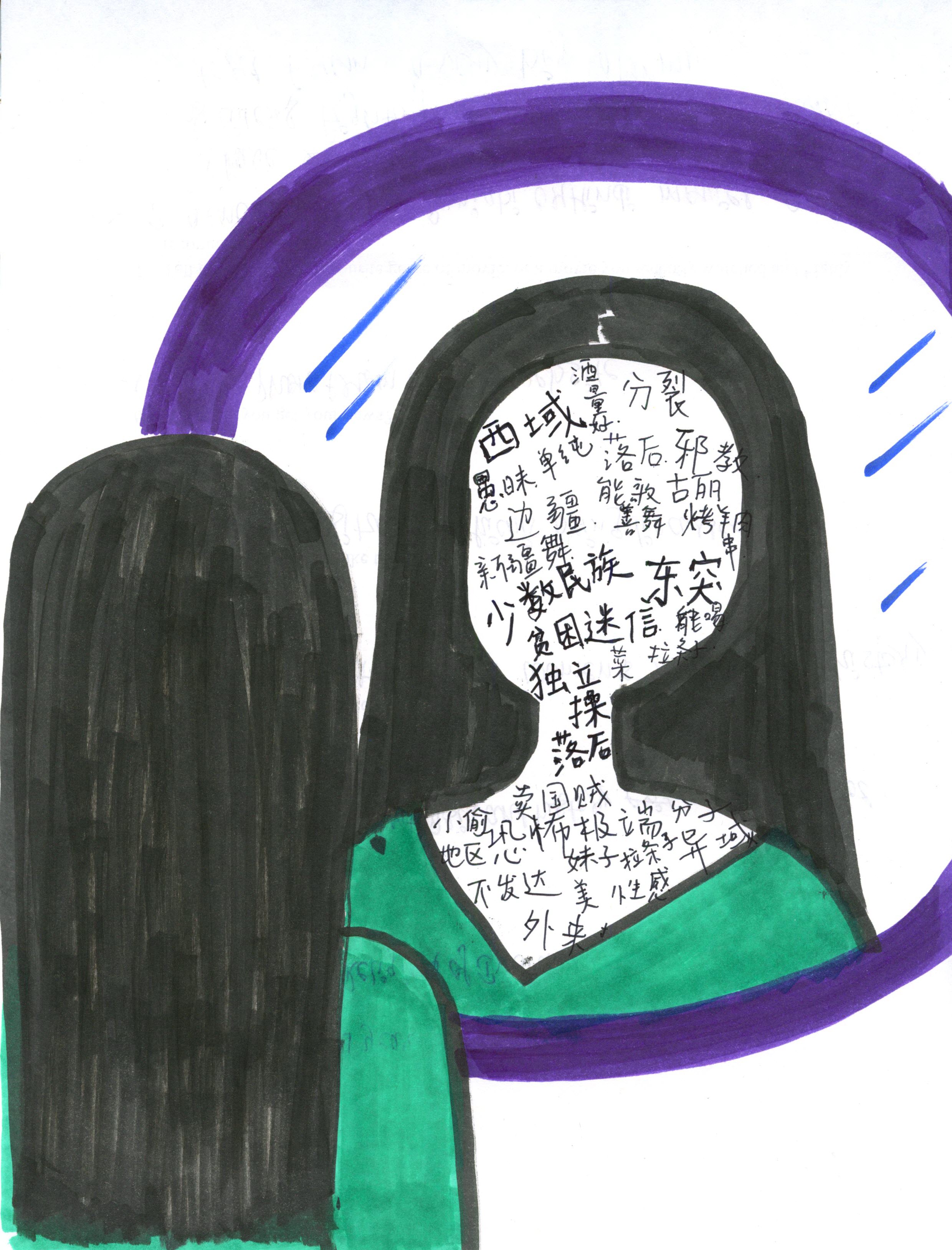
Image from Camp Album Project, depicting "daily reflection of a Xinjiang person" and "perpetual silence, stigma, and representational violence they always have to face alone". The project documents lived experience, trauma, and resistance.


When Eugen Kogon published the English-language version of ‘The Theory and Practice of Hell’, the first book written from inside the German concentration camp system, U.S. publishers cited “apathy on the part of the public” to explain its small print-run. 5 years after the fall of the Third Reich and Holocaust survivors still had to work hard to find intelligent and creative ways to have their stories and the facts heard. If “never again” is to mean genocide should never happen again, it will help to remember that we only remember the Holocaust even happened because its survivors made an unreceptive world listen. Little has changed since 1950. People in Xinjiang have experienced the largest, ethnically targeted internment of minority groups since the second world war. Yet even renowned experts of China struggle to name a real, living person from Xinjiang, despite their growing calls to be heard online and across mainstream media.

The comforting lie that we could never commit such exceptional evil fuses with the shock that such things are still possible in the 21st century, making our era a perplexing one where people say “never again” while watching it happen again. In 1940, Walter Benjamin warned that “the ‘state of emergency’ in which we live is not the exception but the rule”. Silence from the majority who consider themselves unaffected while minority groups are targeted as threats is tragically normal. Naively believing that fascism was an exceptional period aids its return because it prevents us from recognising it until it’s too late. Hannah Arendt famously described the “banality of evil”, that people can choose to retreat from reason and free themselves of responsibility in the refuge of bureaucratic determinism, normalising and routinising violence against groups deemed worthless to their political goals. That people can commit such violence as a routine through a sense of inevitability is more psychologically and philosophically challenging than thinking of fascism as exceptional and dismissing its manifestations. For Benjamin, every document of civilisation is also a document of barbarism.

Why such silence? In a digital age, the evidence from Xinjiang has not only been more compelling and more rapidly available than ever, but also clearer that all global consumers are implicated. While working on the topic, many people who do not tell me why the issue is unworthy of their attention. The reasons I’ve been given, even in 2019, was that “we need more evidence”, at a time when the evidence available included visual satellite images displaying rapid growth of the camp system, official documents outlining funding channels including military equipment, and multiple testimonies of people released describing their experiences. When discussing the consensus among scholars of the subject that the camps and related practices constitute cultural genocide according to the U.N. Convention on Genocide, one friend dismissed the experts, “but there’s no chimneys with fumes of the dead bellowing out”. To focus on the quantity of deaths, in many respects, misses the camp’s purpose and their significance: dehumanisation of peoples towards promotion of the state’s goals. Germany’s “extermination camps” for mass annihilation (Vernichtung) were only one specialised form of concentration camp (Konzentrationslager) and not all concentration camps contained gas chambers or furnaces. Yet all camps were designed to identify, dehumanise, and isolate groups viewed as incompatible with the state’s goals of reviving and producing a romantic vision of an ancient, culturally pure society. The conversation reminded me of an exchange with a Dutch student who proudly told me how Mein Kampf was banned in the Netherlands to ensure fascism could never repeated, before using logics from its pages that his town was being “taken over” and “infected” by immigrants from “outside western civilisation”. Learning about that uncomfortable history would help people recognise its recurrence. This is the engagement Benjamin called for in his Theses on the Philosophy of History; an engagement with history, not a recollection of the past but an attempt to make sense of and respond to the present. Ironically, a talk from a Dutch resistance fighter at primary school, telling the class to “forgive but never forget”, inspired me to read Mein Kampf so that I could just do that.

Since existence of the camps became widespread knowledge, outright denial narratives shifted to downplaying the issue’s significance. Many people say to me, “it comes down to whether it affects us”. Everyone who has lived there or has long-term connections to people who do is affected every day. When they even hear or read the words camp or “training centres”, they are reminded of people they love and people they are disconnected from, not knowing if they are safe, not knowing if they are being tortured, raped, or put to forced labour. That affects us. Widespread existential anxieties about the environment, terrorism, and impending world wars circulate in popular culture. Yet what Benjamin called the “stubborn faith in progress”, blinds us to the uncomfortable reality that we are accepting concentration camps and genocide against stateless groups as banal, inevitably parts of life in the 21st century. Concentration camps not only challenge the belief that the world is progressing but the very idea of progress itself because they are so depressingly familiar. The shock that this could still be happening in the 21st century is useless, unless it shocks us into realising that we see history through the lens of the present and learn that evil can emerge when humans choose to retreat from reason into inevitability.

Thursday, 31 October 2013

China's Insecurity Problem: What's Islam Got to Do With It?


Following the 1995 Oklahoma bombing Edward Said was invited for interview by the US media. As an expert on the Middle East, the media assumed he would have insight into how this “terrorist” incident bore the hallmark of “Muslim extremists”. The perpetrator later turned out to be Timothy McVeigh, a former Gulf War veteran who sought to avenge the actions of the US federal government at Waco and Ruby Ridge. The assumption was this was an attack so barbarous it could only be attributed to “Muslims” and not to the complex range of social and individual factors which lead people to kill themselves to draw attention to their unheard or less heard political claims.

The incident at Tiananmen Square on the 28th October 2013 saw a Jeep driven into a pedestrian area before 3 passengers set the car alight killing themselves and 2 innocent tourists as well as injuring 38 pedestrians. The incident appears to be a relatively crude attack with no complex co-ordination or sophisticated weaponry (they carried knives, machetes, and petrol). The World Uyghur Congress and Uyghur scholar under house arrest Ilham Tohti have called for calm until we have real information to work with and so that this incident is not used to increase repression in Xinjiang. The central government has thus far released very little information except to say this was a “carefully planned, organised, and premeditated attack” which included carrying flags with “extreme religious content.  What this actually means is unclear at best. The fact that the passengers were a man, his wife, and mother suggests there is a lot more to this story and international terrorism does not appear to fit the facts. International media has a remarkably hard job on its hands making sense of it all because the security apparatus was so quick to conceal the entire incident with large police screens. This means it may be impossible to verify any narrative the party-state decides to tell. Experts on Xinjiang have long considered these official accounts to be problematic at best and deliberately misleading at worst. International journalists, such as AFP, have had their photographs seized, domestic media have been given instructions to follow the official line in framing the issue as “terrorism”,  and posts on the subject have disappearing from Weibo, China’s largest social media network, as quickly as they are posted.


A police notice issued to hotels instructed them to watch out for "suspicious people" and Xinjiang registration plates. It named two suspects with Uyghur names from the Piqan (shanshan) and Guma (pishan) counties. The statement was printed online with some media outlets simply adding in the presumption that they are Muslims. Zachary Keck of the Diplomat went further with the irresponsible article ‘Al-Qaeda in Xinjiang Uyghur Autonomous Region?’ which offered no consideration of perspectives from Xinjiang. The USA Daily ran with the headline “Muslim family led Tiananmen suicide attack. No one knows the religion of the perpetrators or if it bears any relevance to their actions. Nevertheless, it appears racial profiling has already begun in Xinjiang with warnings to residents of Shanshan county to be on guard for anyone “suspicious with a big beard or burka. Identifying the men simply as Muslims obscures a huge ream of complex social factors and controversial policies in Xinjiang which have ethnicised social tensions and sparked small-scale incidents of violence in the region. In recent years, such policies have included discrimination in employment, the eradication of Uyghur language as a medium of instruction, the persecution of writers as“separatists”, the confiscation of Uyghurs’ passports, the demolition of old Kashgar, as well as growing restrictions on fasting for Ramadan and wearing Islamic clothing.

If it is true that a group of Uyghurs were responsible for the car attack then we will need to consider how the party-state’s approach to security works in the region. The LA Times suggests this attack at the heart of Chinese power “has raised doubts about the effectiveness of its security apparatus”. Experts on Xinjiang have raised doubts about this for a long time. However, the weakness lies not with the number of troops posted in Xinjiang or Tiananmen or with the number of armoured vehicles patrolling Uyghur neighbourhoods. The weakness lies with thinking that long-term security comes down the barrel of a gun. The party chief for Xinjiang, Zhang Chunxian, unveiled a plan last year to have armed police every 100 metres in urban Xinjiang. This does not suggest that the party-state is in control but that it is very insecure and has to use violence to maintain the position of Uyghurs as an ethnic minority in China. These methods which are supposed to improve security (ie restrictions on religion, monolingual language policies, and arresting authors of fiction) make Uyghurs feel their identities and their individual well-being are threatened. If we want to take security seriously, then a more pertinent question is how to make Uyghurs feel more secure and to give them channels to express their insecurity so that they do not feel the need to turn to violence. The policies above and the incidents they sparked suggest that the more the Chinese government focuses on “security”, meaning surveillance of Uyghurs, the more insecure Uyghurs feel, and the higher likelihood of further violence. The best way to address this security issue would be to listen to those who feel most insecure in Xinjiang and deal with their concerns. These voices can offer perspectives on the issue beyond relying on lazy essentialisations of Islam to frame an as yet entirely unexplained act of violence. 

Thursday, 23 May 2013

Identity and Empathy in the Logics of "Terror"


When Islamophobia explodes across England because an individual who happens to be a Muslim commits an act of violence, it suggests our Kingdom is not as United as our politicians like to think. In the wake of the murder of a British soldier in Woolwich, we would do well to take a step back and turn a critical lens on our media before we feel the need to lock ourselves in our homes for fear of the terrorists in our midst.

“In the life of a nation, we’re called up to define who we are and what we believe”1.

George Bush uttered these famous words in defence of the US decision to send military forces to Saudi Arabia during the Persian Gulf crisis. Bush, like most politicians, was linking identity to national security by saying identity is something we must define, enclose within national boundaries, and send troops abroad to kill and die in the name of its assumed unity. In these types of state-centric narratives of identity, we do not and must not identify with the suffering of those outside our national borders. There is the nation and there is outside the nation. “The boundaries of a state’s identity are secured by the representation of danger”2.  It is through danger which we define who we are because danger is intrinsically Other and outside ourselves. It is a representation of what we do not want to be and what we do not want to happen to us.

“Danger is not an objective condition. It is not a thing which exists independently of those to whom it may become a threat”3. Acts of violence are represented in different ways which tell us a lot about how we define ourselves. When the English Defence League assaulted police in Woolwich last night, this was represented by the mainstream media as a “protest” and the damaging of mosques were “attacks”. These are dangers but of a lesser and local order. There is no link to national security in the way the incidents are reported and discussed. On the other hand, a British soldier being murdered by a Muslim has been immediately labelled “terrorism”, a supposed threat to the very existence of our nation.

So who is under threat? For David Cameron, this was “an attack on Britain – and on the British way of life and that “people in every community will utterly condemn this attack”. Why is this incident an attack on the “British” way of life? Why are racially motivated murders not elevated to this level of threat? Why are the lives lost to violence in working class council estates all across the UK not seen as a “threat” to our nation? These are stories of threats to people’s lives which occasionally make the news but are never seen as matters of national security. These lives are not deemed as valuable as those of British soldiers because they are not seen to embody the nation and so they are represented as local problems of an altogether less threatening nature. This is simply not the type of nation many British people want to live in and it only reinforces existing divisions over class and race to simply pretend they do not exist.

The way the Woolwich violence is represented frames our identity in a way which obscures competing perspectives on the violence and on who we are. It demands we see this attack as a threat to ourselves in a way which racial assaults and violence against young working class men are not. It demands we empathise with the victim and that we must not empathise in any way with the perpetrator. Otherwise, we are excluded from this conceptualisation of “community” which is “sickened” and intellectually paralysed with feelings of condemnation. So we are told we must feel a certain way about this because we are British. When David Cameron says “this attack sickened us all” he may be right but it sickens people in very different ways and for very different reasons. Can we not be sickened by the attack, the nationalist response, and the militaristic UK foreign policy all at the same time? Yesterday, one BBC interviewer even asked “what is that is so annoying about having British troops on their soil?”. To frame British troops invading other countries as an annoyance yet one murder in Britain as a threat to our nation exemplifies an utter dearth of empathy in Britain’s historical and current role in initiating and fomenting violent conflict, simply because it has hurt one of our own.

Condemning comes very easily but trying to understand why this happens takes effort, even empathising with people who you may find disagreeable. Some media coverage has worked to deny British people the right to make up their own minds. The video of one of the attacker’s speech was edited to deny our right to empathise by cutting out the parts where he attempts to empathise. Here is a slightly extended version where he says:

“Remove your governments, they don’t care about you. Do you think David Cameron is going to get caught in the street when we start bussing our guns? Are your politicians going to die? No, it’s going to be the average guy like you”.

You may hate the messenger but it is working class persons who are sent to wage the wars which this man himself highlighted as his reasoning behind the attack. Perhaps not going to wars in the name of national identity might make the people we choose to kill in its name feel more secure. If they felt more secure, they may be less likely to want to wage what they see as very similar wars to what happens when British troops leave our shores in the name of “freedom”.


1. Bush, George (1990) “In Defense of Saudi Arabia” in Sifry, M and Cerf, C (eds) The Gulf War Reader: History, Documents, Opinions.
2. Campbell, David (1998) Writing Security: United States Foreign Policy and the Politics of Identity.
3. Campbell, David (1998).

Thursday, 1 November 2012

Is Scotland a Threat to Global Security?


The issue of Scotland’s potential post-independence approach to international relations is playing less of a role in public debates on independence than ought to be the case. However, the editorial board of the Washington Post (WP) caused somewhat of a stooshy today across Scotland by claiming that the referendum on Scottish independence is part of a “worrying trend”. Their main concern lies in how Scottish would affect “global security”, specifically that:

“An independent Scotland would significantly weaken the foremost military and diplomatic ally of the United States, while creating another European mini-state unable to contribute meaningfully to global security”.

If Scotland became independent then perhaps the UK, a leading ally of the US, would indeed be militarily weakened. This would mean no bridge between the US and the EU and less support for US military projects of “regime change” and “nation-building”. This would be a good thing for security and may force the US government to engage more diplomatically with states which offer alternative approaches to bombing the Middle East into ‘democracy’. The concern of the WP here is of course not the security of the globe. The WP is concerned about the ability of the US to maintain a position of power where it can pursue “security” projects abroad through military might and the support of key allies instead of through multilateral negotiation. This is about securing the hegemony of the alliances between actors in the US state and its leading corporations, which in recent years have invaded Iraq and Afghanistan, privatised their industries, outlawed trade unions, and then seemingly expected democracy to spontaneously emerge.

The Washington Post acknowledged that “more local government can be more efficient, more democratic” yet also that “a weaker Europe means a less stable world and less leverage for the democracies”. Their political priorities are fairly clear here: we ought to choose to be less democratic in turn for more “collective strength”. However, if it made Scotland more democratic and the world less unipolar, then independence could only promote global security.

Sunday, 13 November 2011

Commodified Communities: Selling the Nation in a Global Age

Patriotism and consumerism appear to have no obvious connection. The nation as a bounded community of people who identify with one another appears to stand in contrast to the workings of global capital which flows across borders in the search for profit not social recognition. Production and trade have been transnationalised to the extent that ‘Buy American’ and ‘Buy British’ is impossible when buying any consumer goods made of more than a few simple parts. A single computer may be designed in Silicon Valley, built in Japan, assembled in South East Asia, and dumped in China when past their sell by date. However, we still see a growing clamour to sell national pride and to commercialise the boundaries of belonging. Since 9/11 Wal-Mart expanded its sale of flag-emblazoned merchandise for sale with “respectful” and “patriotic” flag disposal services in stores for used flags positioned conveniently next to shiny new ones. In 2004, Wal-Mart was voted the most admired company in the US despite facing criticism for its unfair wages for women, de-unionisation, and monopoly practices. Professor Jennifer Scanlon says “the American Public and Wal-Mart are complicit in a performance of patriotism in which consumerism stands in for more concrete and difficult civic work”. It is easier to buy belonging in a community than to work to make it a better place. This is a reciprocal relationship between consumerism and nationalism such that transnational companies sell the nation and the nation buys it. This dynamic where consumerism and nationalism reproduce and reinforce each other is not restricted to the US. In China, Aigo is one of the nation’s leading electronic companies and is now a sponsor of Manchester United FC. The name Aigo in Mandarin Chinese (aiguozhe; 爱国者) means “patriot” and this is not lost on Chinese consumers seeking to “buy Chinese” in an age where their consumer options are transnationalised. One of the most frequent seen adverts on Chinese state television (CCTV) between 2009-2010 was for a medicine brand which ended with the catchphrase “mother I love you, motherland I love you” (mama wo ai ni, zuguo wo ai ni; 妈妈我爱你, 祖国我爱你). Viewers are then left with the impression that loyalty to a consumer brand equates to loyalty to the nation. You can buy belonging in a national-consumer community.

How people choose to spend their money has long been represented by states as linked to their identity as members of the nation. One of the many propaganda cartoons produced by Walt Disney in the first half of the twentieth century represented American consumers as divided between spending and saving. Scrooge McDuck tells Americans they must “save for victory” in World War 2. Spending money was un-patriotic because it helps the rise of Fascism by draining the treasury of tax resources. Of course representations of the nation have changed as capitalism becomes more and more globalised and it shifts from supply-side economics to demand-led. One of the first public addresses by President George Bush after 9/11 was to stress the threat of terrorism to our ever-expanding consumerist lifestyle linking shopping with national security: “We cannot let the terrorists achieve the objective of frightening our citizens to the point where we don’t…conduct business, we don’t shop”. “We” are being defined as shoppers and the threat of terrorism is to our “we-ness” is through the danger presented to our consumer-lifestyles. More recently, David Cameron defined Britishness through our economic behaviour during the “financial crisis”: “Some say that to succeed in this world, we need to become more like India or China, or Brazil, but I say: we need to become more like us. The real us. Hard-working, pioneering, independent, creative, adaptable, optimistic, can-do”. In practical terms Cameron continued to stress we pay off our credit card bills, tying national loyalty to stabilising financial capitalism. It seems patriotism is emerging as a resource our leaders can draw on to demand the economy works in specific ways. “Can-do” or “stiff upper lip” means “flexible” labour protection policy and a “disciplined” labour force in the words of the IMF. Cameron is using patriotism to tell people in Britain that they are not like Indians or Chinese, we are different. We should supposedly keep it that way by paying off our credit card bills and working hard and without question in a labour market that has seen employment slump and benefits slashed since the Conservative Party came to power. To be British means to behave in ways which maintain the workings of capitalism as it currently works- don’t’ complain about anything or you aren’t “can-do” and you aren’t British. For Cameron, it also means we should identify with billionaires within our borders who benefit from inequality instead of Indians and Chinese who suffer from it.

The recent public debates over the wearing of the poppy for Remembrance Sunday are a case in point. Turnouts at the cenotaph for actual remembrance are relatively small and co-ordinated through active organisations such as the British Legion. However, more passive consumers can now purchase all manner of goods from ties to caps to umbrellas to cufflinks to tablecloths in order to display their level of patriotic devotion and stand “shoulder to shoulder with all those who serve”. Judging by the Poppy Shop’s apology on their website in November 2011 that orders would be delayed due to a high volume of orders, it appears the British public are keen to buy their community membership. However, they are less keen to do “concrete and difficult civic work”. Joining a campaign, for example, to give an hour of one’s time to look after elderly veterans who are now in Britain’s understaffed nursing homes would be of more benefit than wearing a poppy. Wearing of the poppy to symbolise national belonging, which involves nothing but a small purchase, has in recent years been mobilised to the extent that it is framed as an issue of national security. The BBC linked tragic deaths of soldiers in Afghanistan, a very real and violent conflict, to the banality of the poppy. On Question Time, the popular British politics ‘debate’ show, Stephen Pollard, journalist and author on Israeli politics and history, claimed burning poppies should be outlawed, regardless of freedom of speech because they go to the heart of “who we are”. Identity here is framed as a security issue such that alternatives to this particular understanding of national identity are to be eliminated through force. David Cameron saw fit to demand FIFA, football’s ruling body, make the exception only for England to allow “political and religious” symbols on national football shirts in their game against Spain because it was a matter of “national pride”. Cameron and other Conservatives stressed that the poppy was “not political”. However, it is impossible to claim England’s supposed symbols of “national pride” are “not political” but those of other nations, which are banned on national football shirts, are “political”. This representation of the poppy as a performance of patriotism may not be new. However, what is new is this vigour that defines purchase and display of a poppy as the very heart of “who we are” and a symbol which is unquestionable and beyond politics. The English national football team have played on the 11th November many times over the years and haven’t worn or asked to wear poppies on their shirts. This is but an example how of national communities become a commodified mode of self-understanding where alternatives are deemed ‘outside’ the boundaries of community. This follows the framings of how we organise capitalism and how we spend our earnings as security issues at the heart of our national identities. There are many ways to interpret why wars happen and whose interests they serve. However, the voices of those who see the First World War as a human tragedy which saw states across the world needlessly send millions of working class humans to their death are being excluded as un-patriotic because they don’t wish to wear the poppy. The poppy is said to represent them but it does not represent their views because it has become a symbol of “national pride” instead of remembering dead human beings. Today, identifying with humans who are victims of wars waged by Britain in Iraq and Afghanistan beyond our borders over those within our nation who send them to war is deemed unpatriotic in the same way that submitting to a flexible, unregulated labour market is essential to being British. Today, capital and people flow across borders but there is still capital to be made by going to war and selling its products under the banner of patriotism.